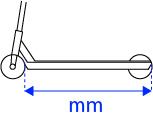
Total Height
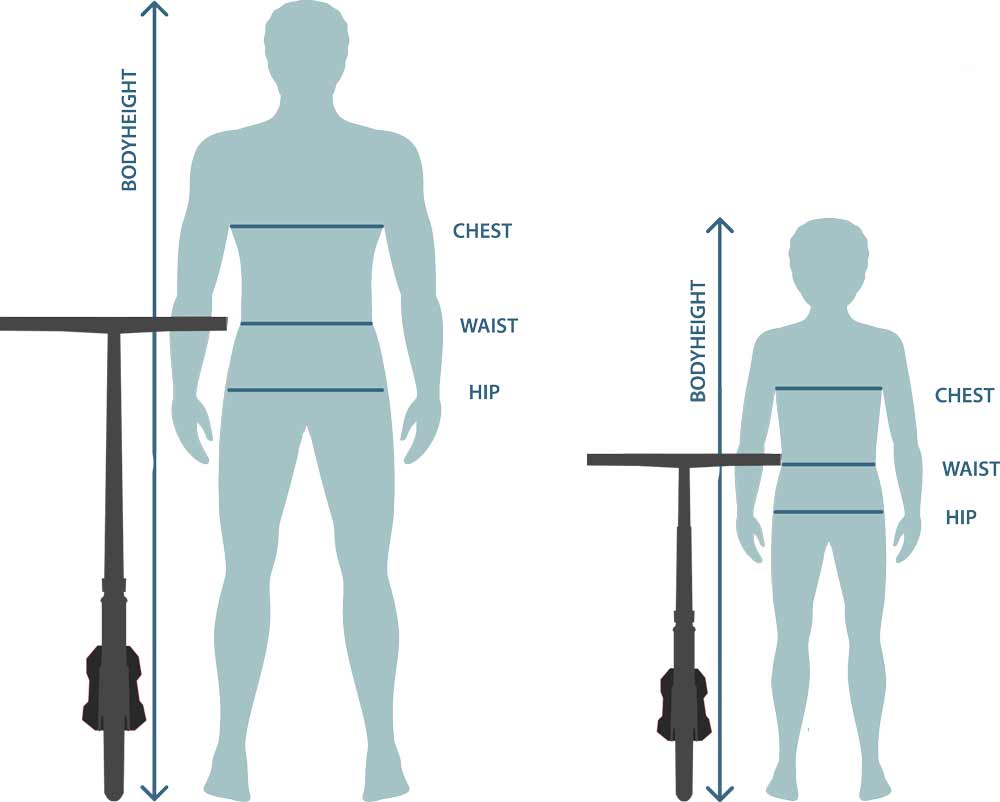
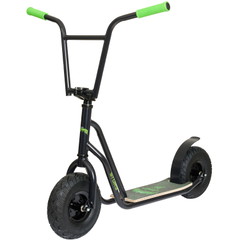
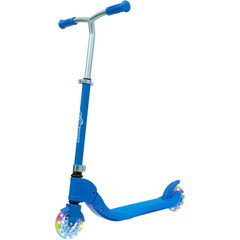
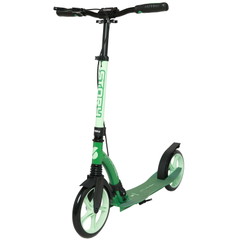
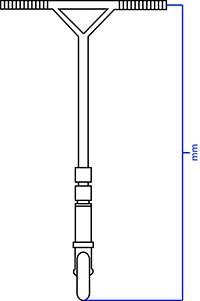
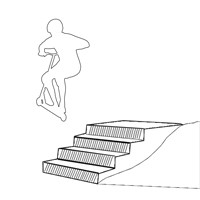
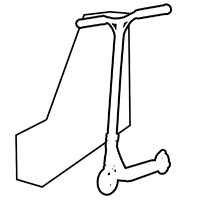
The total height of the entire scooter. There is no right or wrong in relation to height of a scooter. Generally one can say that low scooters are oriented to technical tricks, whereas high scooters are for transport and comfort. Some scooters can be adjusted to suit you and your needs.
Folded Size
Folded size describes how compact the scooter becomes when it is folded.
Compact size:
Easy to carry and store — fits in a car boot, cupboards, or under a desk.
Medium size:
Balances a comfortable riding position with easy handling.
Large size:
Offers extra stability and space, but takes up more room during transport.
In short:
The smaller the folded size, the easier the scooter is to carry and store.
Max load
Max load is the manufacturer's recommended load of weight on product. This set out for their knowledge and assessment of the product so that the service life is not reduced.
Weight
The total weight of the scooter when it is complete. Heavier scooters are often made of a material, such as steel, which increases the durability and longevity. Where scooters made of lighter materials, such as aluminum, is lighter as well as easier to transport along with you. Whether you should choose one or the other depends on how much you are willing to spend and what you will be using the scooter for. A scooter does for example need to be able to stand through most and it would therefor be clever to buy it in a durable material.
★ Quality
Quality. This is an expression of our professional assessment of the scooter as a whole. This is based on the materials, construction, performance and estimated life of the scooter. With a high rating here, you have acquired a super good scooter that is worth showing off.
★ Transport
A scooter that is good for transport is typically comfortable, stable, and easy to handle over longer distances.
Features such as large wheels, suspension, good brakes, and a foldable design play an important role.
The rating ranges from 0 to 5 stars, where 5 stars represent optimal transport comfort and functionality:
★★★★★ Perfect for transport – high comfort, stable construction, large wheels, and effective suspension, ideal for daily commuting and longer rides.
★★★★ Very suitable for transport – solidly built, comfortable ride, and practical features for everyday use.
★★★ Suitable for transport – a stable scooter for shorter distances and light commuting.
★★ Less suitable for transport – can be used for transport, but with limited comfort and functionality.
★ Not suitable for transport – mainly for play or short trips, not designed for daily transportation.
★ Speed
A scooter that’s good for speed is typically solidly built and fitted with large wheels, which provide a smoother roll and a higher top speed. The rating runs from 0 to 5 stars, where 5 stars means maximum speed and efficiency:
★★★★★ Very fast scooter – solid construction, large wheels, and an optimal roll; perfect for longer rides and commuting.
★★★★ Fast scooter – robustly built with good wheels; delivers high speed for everyday transport.
★★★ Medium speed – stable scooter with standard wheels; suitable for short trips around town.
★★ Lower speed – smaller wheels and a lighter build; more focus on comfort than speed.
★ Very low speed – for beginners and short distances; not designed for speed.
★ Comfort
A scooter with high comfort is typically defined by large wheels, suspension, and a wide deck (standing platform),
which together provide a more stable and comfortable ride. The rating goes from 0 to 5 stars, where 5 stars means
maximum comfort:
★★★★★ Very high comfort – large wheels, effective suspension, and a wide deck; ideal for longer rides and uneven surfaces.
★★★★ High comfort – good wheels and a solid deck; comfortable for everyday use.
★★★ Medium comfort – standard wheels and deck; best suited to shorter rides on smooth surfaces.
★★ Low comfort – small wheels and a narrow deck; best for short distances.
★ Very low comfort – minimal stability and shock absorption; mainly for beginners or short, simple rides.
★ Folding system
The scooter folding mechanism is evaluated based on how easy, quick, and stable it is to fold for transport and storage.
The scale ranges from 0 to 5 stars, where 5 stars represent the most user-friendly system:
★★★★★ Very easy to fold – one-click system, fast and simple, even with one hand.
★★★★ Easy to fold – requires only a few steps, still quick and practical for everyday use.
★★★ Moderately easy – works well, but takes a bit more time or requires two hands.
★★ Difficult – several steps or solutions that are not very user-friendly.
★ Very difficult – requires tools or many steps; not suitable for frequent folding.
Deck length
The total length of the deck's surface. The length of the deck decides how much space you have for your feet on the scooter. The longer a deck, the more space you have to stand on, where the shorter a deck, the less space you got to stand on.
Deck width
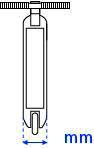
The total width of the deck's surface. The width decides like the length of the scooter's deck, how much space you have to stand on for your feet. An example of width would be if you could have both feet next to each other on the scooter's deck surface or not. Besides that you need to have enough space to accelerate without losing your balance.
Deck design
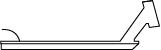
There are three types of deck design: one-piece, two-piece and foldable. One-piece decks are very durable since they are made of welded parts, whereas two-piece decks are put together with bolts. The advantage of two-piece decks is that they are often able to fold, and some models have headtubes which gives the possibility for different angles. A foldable design makes it possible to fold the scooter together so that it can be quickly taken under the arm or on the shoulder.
There are many different functions and systems for foldable scooters. If you need your scooter for commuting between the bus, train, car or just for getting around, a fast and easily foldable system is an advantage. You will quickly experience that this feature makes a difference whether you use your scooter to take with you on the trains, buses, etc.
Deck material
The deck of the scooter is usually made of aluminum, as it is a very lightweight and durable material. The aluminum is relatively soft, therefore, it will be mixed with other metals. Aluminum is divided into alloys in which the value is determined by the mixture of metal. Higher alloy provides more durable product material.
Material strength grade
The strength of aluminum is measured in tons, how many tons the aluminum is pressed under. A scooter deck of T4 aluminum is produced under 4 tons of pressure, where T6 means that it has been pressed under 6 tons. The more tons the metal has been pressed under, the stronger the scooter.
Headtube length
The headtube length affects how the front fork, compression system, and headset fit together.
Short headtube (about 100–105 mm):
Light and compact, providing lower weight and quicker response. Often used on stunt scooters.
Medium headtube (about 106–115 mm):
Standard size that fits most set-ups and offers a good balance.
Long headtube (about 116–125 mm+):
Improves stability and comfort, making it ideal for commuting scooters and adult scooters.
In short:
Short headtube = lower weight and quicker steering.
Long headtube = more stability and comfort.
Headtube angle
The headtube angle affects how the scooter steers and responds while riding.
Low angle (about 82–83°):
Provides more stable and calm steering, making it ideal for commuting scooters and beginners.
Medium angle (about 83.5–84.5°):
Offers a balanced steering response with a good mix of control and manoeuvrability.
Steep angle (about 85–86°):
Delivers fast and precise steering, preferred by experienced riders and for doing tricks.
In short:
The steeper the angle, the quicker the steering response; the lower the angle, the more stable the scooter.
Concave
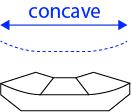
Concave is the inward curvature of deck's surface. It helps to lock your feet firmly to the deck and thus providing a better grip, so you avoid losing balance and falling off as easy. The concave curvature is measured on the scooters deck and is measured in degrees.
Brake type
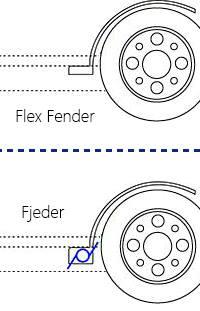
There are different brake types- bolt, spring and flex fender brake. Bolt and spring brakes make more noise, so if you want more silent brakes you should go for flex fender brake, however this will cause the wheels to have a slightly and overall lessened longevity.
Bar height
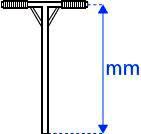
The total height from the bottomof the bar to the middle of the handlebar. it is recommended that the height of the bar fits the rider. Some scooters can be adjusted by you to fit your height, while other scooters comes in fixed heights, where you then will have to pick the one most suitable for your height. The reason for this is that a stunt scooter needs to be able to take punches during tricks, so if the bar is adjustable on your tricks scooter, it will become weaker and possibly give you trouble, when performing tricks.
bar width
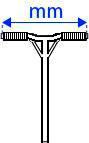
Different widths of bars suits different riding styles. With air tricks you have far more control of the trick with a wide bar, a narrow bar is better suited for technical tricks. Thus, the bar's width have to suit your skills, and it may therefore be worth considering what the scooter primarily will be used for.
Bar shape
The bar shape affects your riding style, comfort, and control of your scooter.
T-Bar
A classic, simple shape – strong, lightweight, and preferred by many trick riders.
Gives stability and a clean look.
Y-Bar
A more robust design with extra support arms – increases strength and durability.
Great for heavy use and bigger riders.
Gusset Bar
A reinforced version of the Y-bar with extra welds around the joints.
Built for maximum strength on hard landings.
Batwing / V-Bar
A slightly curved or angled design that improves ergonomics and gives a unique look.
Combines comfort and control.
In short:
T-Bar = light and simple
Y-Bar and Gusset Bar = strong and durable
Batwing/V-Bar = comfort and style
Bar material
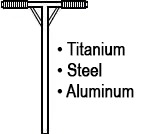
Steel is a very strong and a durable material. Bars made of steel is very strong, but also much heavier than bars of aluminum. Steel bars caters more for scooters driven hard. Such scooters would be stunt scooters, which have to take a lot of hard impact when performing tricks. It is therefor a clear advantage if you buy your stunt scooter in a durable material. Furthermore, if you are interested in a scooter bar that combines both strength and lightness, a titanium bar is the best option. Titanium is a super strong material with an incredible durability, which unlike steel does not weigh much. What this partly means is that with a titanium scooter bar you get the lightness as with aluminum and the strength as with steel.
Bar inner diameter
The bars inner diameter determines the fork that fits. Whether it is a one-piece fork or a two-piece fork depends on what you imagine yourself using the scooter to. The smart thing about a two-piece fork is that it often can be folded together, which can be practical for carrying with you on the bus or the train, where with a one-piece fork the great thing is the durability, which makes it perfect for stunt scooters.
Bar outer diameter
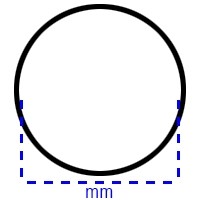
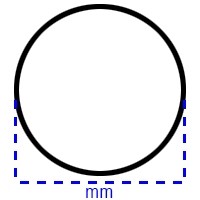
The bar's outer diameter is what determines the type of clamp which will fit. Thus it is recommended that the bar's outer diameter fits the clamps inner diameter. Note however that some clamps can be used in both standard bars and over sized bars.
Handgrip width
Handgrip width affects comfort, control, and how the scooter feels to ride.
Narrow grips (about 110–120 mm):
Quick and precise steering — good for tricks and smaller hands.
Medium grips (about 125–135 mm):
A standard width — a good balance of control and comfort.
Works for most riders and most scooters.
Wide grips (about 140–160 mm):
More comfort and better weight distribution — ideal for commuting scooters and longer rides.
In short:
Narrow = faster response.
Wide = more comfort and relaxed steering.
Grip material
The material used for grips has a major impact on comfort, durability, and control while riding.
Rubber: The most common material, offering good grip, high wear resistance, and a balanced level of softness.
Silicone: Extra soft and shock-absorbing, making it ideal for longer rides and commuting scooters.
TPR (Thermoplastic Rubber): Combines flexibility and durability and is often used in high-quality grips.
Foam: Very lightweight and comfortable, but wears out more quickly, making it best for beginners or comfort-focused riders.
Leather / faux leather: Typically found on premium or classic models, giving a more exclusive look and feel.
Tip: Choose the material based on the level of grip, comfort, and durability you prefer.
Grip outer diameter
Grips vary in thickness (outer diameter), which affects grip, comfort, and control.
Thin grips (approx. Ø 27–29 mm): Provide close contact and precise control – often preferred by riders with smaller hands or for tricks.
Medium grips (approx. Ø 30–32 mm): Standard size with a good balance of comfort and control.
Thicker grips (approx. Ø 33–35 mm): Increased comfort and shock absorption – ideal for longer rides or commuter scooters.
Material: Soft rubber or silicone for secure grip and comfort while riding.
Grip inner diameter
Grips are the rubber handles fitted onto the handlebars, and their inner diameter must match the size of the handlebars.
Standard (Ø 22.2 mm): Fits the vast majority of scooters and handlebars.
Oversized (Ø 24 mm): Used on handlebars with a larger diameter, typically with HIC or SCS systems.
Integrated Bar Ends: Some grips come with integrated end plugs, which protect the handlebars.
Material: Soft rubber or silicone for optimal grip and comfort.
Clamp size
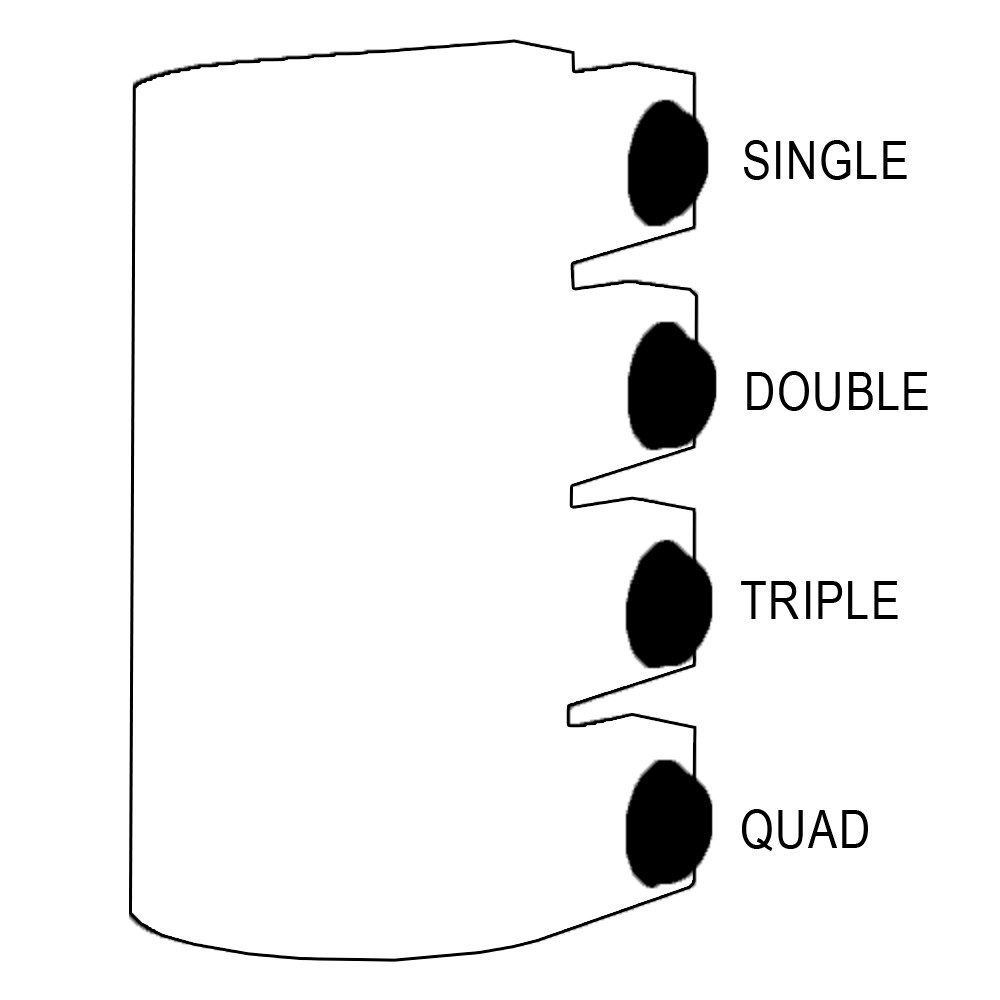
The clamp size of the clamp depends on the number of bolts the clamp is tightened with. Therefore what goes is that the more bolts the larger the size of the clamp, and so too it goes that the fewer bolts used on the scooter, the smaller the size of the clamp.
Headset type
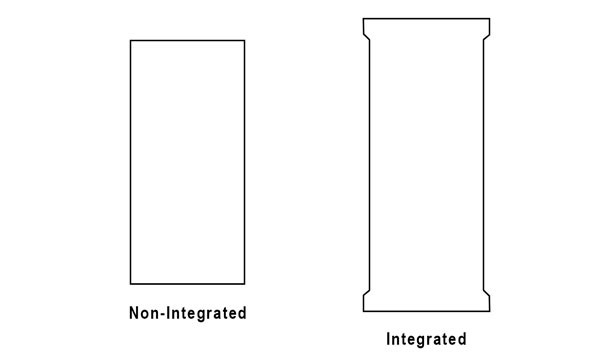
The headtube of the deck determines which headset-type the scooter is using. An integrated headset is more protected and durable than a non-integrated headset. A non integrated headset sits inside the headtube, therefore it is more fragile than the integrated headset.
Fork design
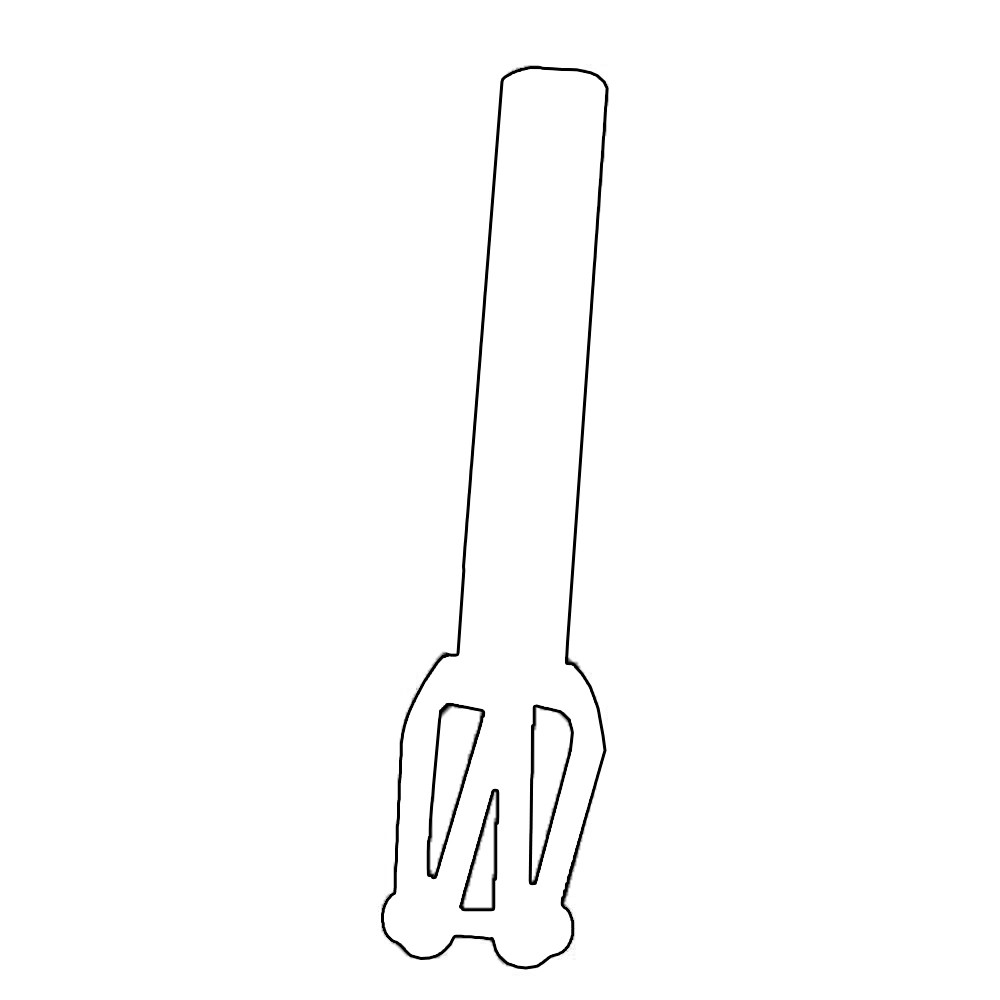
Forks can be divided into two main groups: one-piece of two pieces. One-piece forks is molded or cut from one piece of metal, it gives the fork fewer weak points compared to two-pieces forks which is composed of several parts. Furthermore, the forks can be divided into forks with or without thread. Threadless forks requires a compression kit.
Fork type
The fork connects the handlebars to the front wheel and comes in several types, depending on the scooter’s quality and intended use.
Threaded: Classic threaded fork – simple and affordable, but less durable.
IHC: Lightweight and stable with internal compression, used on many modern scooters.
HIC: A stronger version of IHC, suitable for heavier riders.
SCS: Strong and precise design with maximum strength and stability.
One-piece: Machined from a single piece of aluminium – extremely strong and vibration-free.
Suspension: With suspension for increased comfort on uneven surfaces.
Materials: Aluminium (light and strong), steel (durable and affordable), or titanium (ultra-light and premium).
Scooter LED wheel
Some scooters come with LED lights built into the wheels, which provide extra visibility and a fun effect,
especially when riding in the dark.
With battery: The LED light is powered by a small battery inside the wheel, which can be replaced when needed.
Without battery (dynamo): The LED light is activated by movement as the wheel spins, meaning no batteries are required. The light only turns on while you are riding.
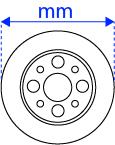
Wheel diameter
The size of the wheels should depend on your riding style. If you have a lot of focus on the driving experience with good flow and speed, go for bigger wheels, whereas choosing smaller wheels if you go for quick response and better control. However, it is important that the diameter of the wheel fits with both the front fork, deck and brakes.
wheel profile
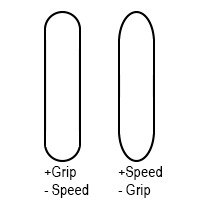
What a flat profile does is it provide the absolute best and highest possible grip for scooters to achieve, where as what the narrower profile does is that it allows a lot more speed. The fork shape must match properly with the scooter wheel's profile.
Wheel design
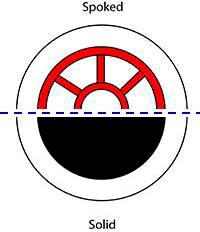
There are different core designs: solid and spoked. Solid core wheel is relatively heavy wheels for scooters, but their weight also provides a lot more durability and strengthens the wheels. Spoked wheels are lighter wheels for scooters, which therefore leads to a less durable and strong wheel.
Wheel hardness
The hardness of a wheel is measured on the durometer scale that goes from 0 to 100 A, where 0 is the softest and 100A is the hardest. Harder wheels last longer and run faster, but are less comfortable on uneven grounds than soft wheels. Softer wheels do however wear away faster, but have a good grip and are perfect for parks and indoor use.
Core material
Aluminum and nylon wheels each have their qualities. Aluminum wheels are the strongest but nylon wheels are the lightest. Whether it should be the one or the other depends mostly on your choice for what you will use the scooter for. It is smart to have stronger wheels for outdoors tranportation and if you want to do tricks.
Bearings
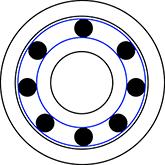
Bearings are divided into ABEC. High ABEC values mean that the bearing is made with more precision and therefore better quality. It is recommended that your ABEC-value is high for higher speeds and lower if your wheel have to take a lot of impact, like the impact you would expect if you decide to use it for tricks.
Assembly
Almost ready to run or ready to run. Always check the scooter before use, and be aware that it is different, how you receive your scooter. if your scooter is coming complete, it is completely ready for use, whereas if it is only partially complete, then there will be few parts that need to be tightened and assembled, which must be done with standard tools.







 Always climate compensated shipping
 Free exchange